

Investing in gold is an established way of preserving wealth and hedging a portfolio against broader economic risks. The simplest way is by the physical means of bullion- gold bars and coins in your own possession. Nevertheless, this tangible asset is also associated with peculiarities of benefits and trade-offs that all investors should carefully consider.
What Is Gold Bullion?
If you own gold jewelry, you’re already familiar with carats—like 18-karat being 75% pure. But the gold that banks and serious investors stockpile is a different asset entirely. Investment-grade gold is the benchmark for true wealth preservation.
Defining the Gold Standard
Bullion Investment-grade gold is gold of at least 99.5 purity. It is not the alloyed metal that is applied on rings or necklaces, which is blended to be durable and coloured. This is simple raw money, in bars or coins of the official mints and refiners.
Key Characteristics of Bullion
- High purity: A minimum fine level of 99.5 -1 (995 per thousand).
- Recognized Form Stamped coin or bar, reputable source like Royal Mint or PAMP.
- Pricing Structure: It is determined by the live gold spot price and a premium by the manufacturer and dealer.
Gold Bars vs. Bullion
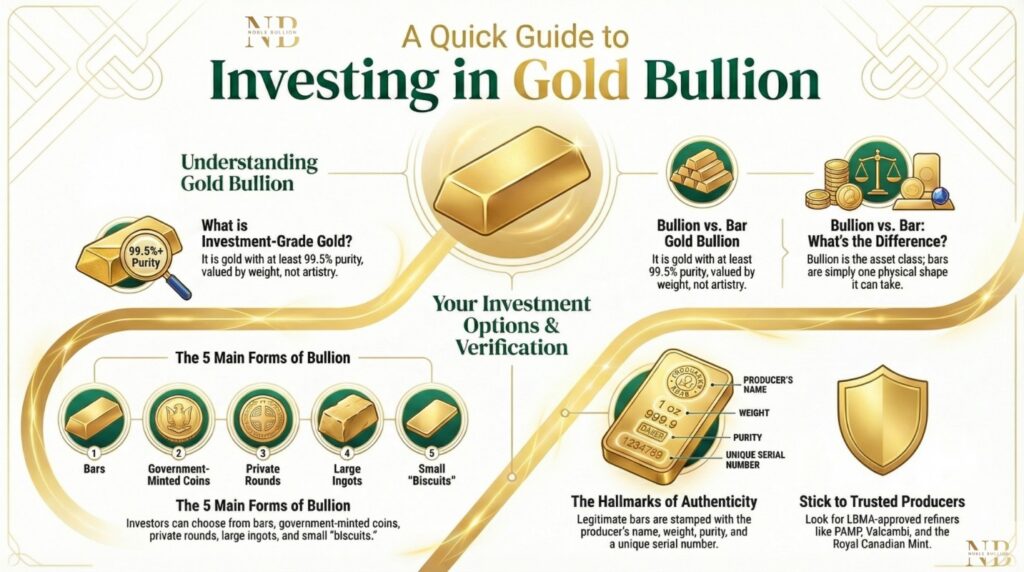
Specific, rectangular ingots of refined gold are called gold bars. The purity of them should be at least 99.5 percent, and they should be of standard weights, between one ounce and 400 ounces of Good Delivery bars. It is just their metal that is valuable.
Gold bullion is a broader category. It is any high-grade gold (usually 99.5 to 99.99 percent in weight and amount of metal) sold on a weight and quantity basis, rather than on face value or collectability. Bars, coins, and rounds that satisfy the standard of purity fall under this category.
The Key Difference
The main difference is that the terms bullion and bars are used to refer to the class of asset and the physical representation of the asset, respectively.
- Gold Bullion: The high-purity, weight-based value general type of investment.
- Gold Bars: It is one of the main physical forms in that category.
The 5 Main Types of Gold Bullion
1.Gold Bars
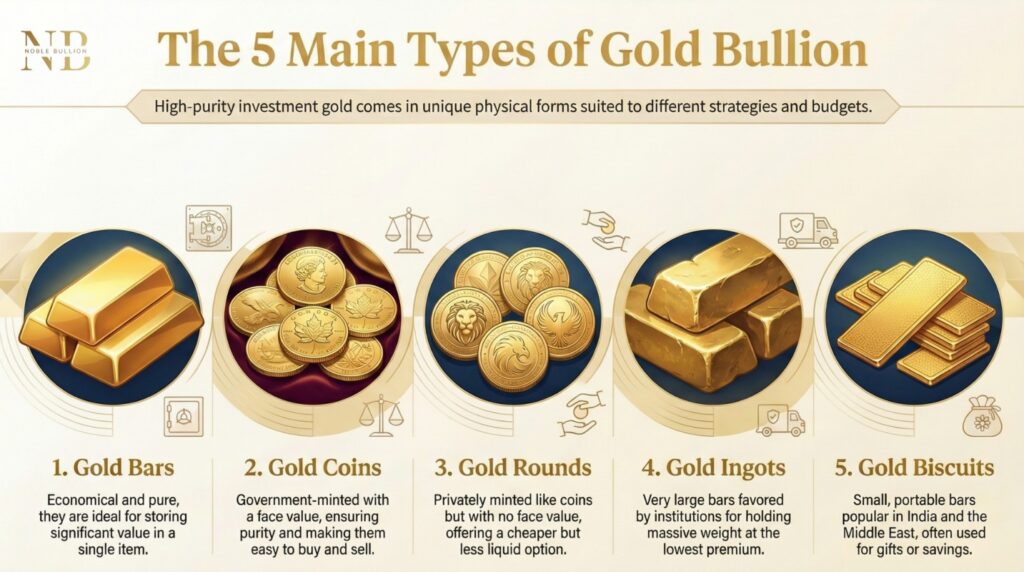
These are the simple ingots, which are loved as very pure and very economical. These vary between one ounce to 400 ounces, with the larger bars being offered at the lowest premium to the spot price, hence the best to hold a lot of value in a single bar.
2. Gold Coins
Coins such as the Eagle or Maple Leaf, which are made by governments, such as the U.S. or Royal Canadian Mint, have official face value. This position ensures weight and purity which makes them liquid well and world-renowned to easily sell and buy.
3. Gold Rounds
Rounds appear like coins, yet they are minted privately and do not carry any face value. They tend to be cheaper than official coins, and are an easy and cheap method of holding pure gold, albeit somewhat less liquid.
4. Gold Ingots
Ingots are often called another name of bars, but are often bigger and rectangular-shaped. They provide the most affordable option for purchasing a great amount of weight in a single stackable item and are typical among institutions and extremely wealthy individuals.
5. Gold Biscuits
Biscuits are light and portable, which is because they are smaller than normal bars, and they are usually produced in certain places, such as India and the Middle East. They are excellent as individual savings or as gifting, somewhere in between the jewelry and real investment bars.
How to Identify Investment Grade Gold Bars
It is not hard to find actual investment-grade gold bars once you are trained on the marks to look for. These bars are subject to rigid international guidelines; hence, they are credible and readily marketable among serious investors.
The Hallmarks of Authenticity
Every legitimate bar carries specific physical credentials. Its weight, purity, and dimensions must be exact. Crucially, it should be stamped with the producing mint or refinery’s name and logo. Larger bars will also include a unique serial number. They are essential anti-counterfeiting measures that verify the bar’s origin and purity, protecting your investment’s value.
Trusted Producers and Global Standards
The finest bars are those of LBMA approved refineries or sovereign mints. Their hard production regulations allowed the bars to be exchanged in the world markets without reservations.
Leading producers include:
- PAMP (MKS Pamp)
- Valcambi
- Perth Mint
- Royal Canadian Mint
- Argor-Heraeus
- Credit Suisse
Gold Bar Sizes and Practical Choices
The gold bars are minted in a variety of weights to accommodate various levels of investment starting with the individual investors to the central banks.
Common sizes include:
- 1 oz, 10 oz, 100 oz
- 100g, 250g, 500g, 1 kilo
- 400 oz (London Good Delivery bars)
The institutional standard is the 400 oz Good Delivery bar, which is made by banks and governments. For most private investors, bars of 1 oz to 1 kilo offer a more practical balance of premium efficiency and flexibility.
Conclusion
Buying in bulk physical gold in bars is usually the most economical method of investment. The secret behind this is quite easy: check the refinery stamp, check the weight and purity marks, and make sure that the bar is of approved source to LBMA. This rigorous strategy transforms an object of metal into a concrete, marketed economic good.